
-
 Special Offer
Periodic Table with Real Elements
Regular price $72.95Regular priceUnit price per$76.95Sale price $72.95Special Offer -
CMY Color Cube - 50mm
Regular price $28.95Regular priceUnit price per -
 Special Offer
Stirling Engine Model
Regular price $49.95Regular priceUnit price per$53.95Sale price $49.95Special Offer -
Bluetooth Tesla Coil Speaker
Regular price $46.95Regular priceUnit price per$0.00Sale price $46.95 -
 Special Offer
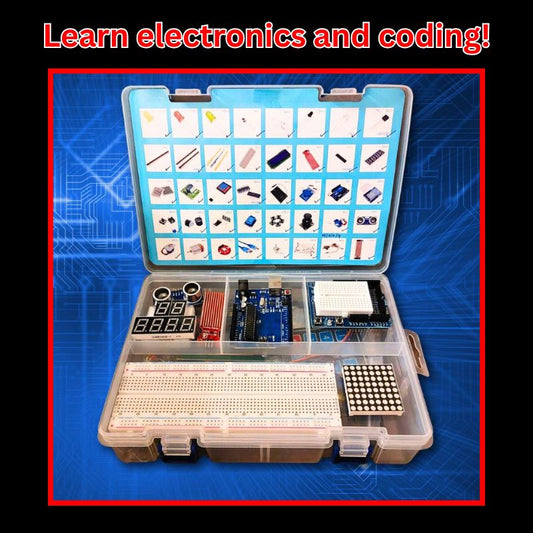
Starter Kit for Arduino UNO R3
Regular price $63.95Regular priceUnit price per$67.95Sale price $63.95Special Offer -
Binary Wristwatch
Regular price $26.95Regular priceUnit price per$0.00Sale price $26.95 -
Spider & Insect Specimens
Regular price From $32.95Regular priceUnit price per -
 Special Offer
Inception Metal Spinning Top
Regular price $17.95Regular priceUnit price per$18.95Sale price $17.95Special Offer -
Polished Stones Geology Kit
Regular price $72.95Regular priceUnit price per -
Tensegrity Mug Holder
Regular price $28.95Regular priceUnit price per$0.00Sale price $28.95 -
Ferrofluid Display
Regular price $25.95Regular priceUnit price per$0.00Sale price $25.95 -
Spine and Pelvis Model
Regular price $47.95Regular priceUnit price per


Christmas Gifts for People Who Love Science
Buying a present for someone who works in science can feel strangely daunting. They know more about their field than you ever will, they probably already own the equipment they need, and there's a nagging worry that whatever you choose will seem amateurish next to the real thing.
Here's the reassuring truth: it almost never plays out that way. A good Christmas gift for a scientist doesn't need to be professionally useful, and it certainly doesn't need to teach them something they already know. What it needs to do is give them something interesting to look at, wonder about, or tinker with — outside the demands of their actual job.
Why the Best Gifts Sit Outside Their Specialism
Counterintuitively, the safest bet for a scientist is usually the subject they don't work in. A microbiologist has plenty of microscopes. A software engineer has no shortage of screens. What they rarely have is a good excuse to explore something adjacent — a small piece of engineering they've never stopped to understand, a geological specimen with an interesting story, an optical effect they've seen referenced but never actually played with.
A gift from a neighbouring discipline sidesteps the whole problem of "they know more than me." You're not competing with their expertise. You're giving them a small, well-chosen distraction from it.
Gifts That Reward a Wondering Mind
Scientists tend to enjoy things that raise questions rather than settle them. A device that demonstrates a principle in an unexpected way, a model with an ingenious mechanism, or a display piece that catches the eye and prompts a "how does that work?" — these are the kinds of gifts that land well, precisely because they mirror the way a scientist thinks.
It helps to picture how the recipient would actually use the gift. Some people want something to build. Others want something to observe. Others again just want a nicely made object on their desk that gets them talking to colleagues. None of these is better than the others — but matching the gift to the personality makes a much bigger difference than matching it to the field of study.
Hands-On Gifts for People Who Learn by Doing
For someone who prefers to understand things by making them, a STEM gift for adults can be genuinely enjoyable — not as a beginner's exercise, but as a pleasant way to spend a few hours on something tactile and satisfying. An electronics project, a small build-it-yourself model, or a kit that produces a working device at the end are all good options.
The key is not to underestimate them. Skip the entry-level kits aimed at children and look for something with a bit of substance: real components, a genuine challenge, and a finished result worth showing off. A working device that they assembled themselves tends to feel far more rewarding than a ready-made gadget, however clever the gadget.
If they're already experienced in their field, this is even more true. Someone who understands the theory well will still enjoy the physical satisfaction of building something properly, especially if it's outside their usual comfort zone.
Displays and Curiosities for the Desk or Study
Not every gift needs to be interactive. Some of the most appreciated presents for scientists are objects that simply sit somewhere visible and provoke interest — a scientific display, an unusual specimen, a well-made model of something natural or mathematical. These gifts have two audiences: the recipient, who enjoys having them around, and every visitor who asks about them.
There's a reason these tend to work well for people whose day job is highly specialised. A display piece from a different field gives them a small, self-contained corner of science that has nothing to do with their work. It's the intellectual equivalent of a weekend away — a change of scene, without leaving the subject they love.
Ideas for the Scientist Who Already Has Everything
If they seem to have every tool, book and piece of equipment they could possibly want, this is actually a helpful clue. It means the gift shouldn't be practical at all. Practical things they've already bought for themselves. What they probably haven't bought is something purely for enjoyment — a scientific curiosity, an unusual demonstration piece, or a project that exists for the pleasure of doing it rather than the result.
Aim for memorable rather than expensive. The best unique gifts for scientists are often modest in price but distinctive in character: something they'd never have thought to buy, but are quietly glad to own once it's on their shelf.
If you're still unsure, explore our collection of Christmas gifts for scientists — a range of hands-on projects, scientific displays and unusual curiosities chosen for people who never quite stop wondering how things work.
Frequently Asked Questions
What do you buy a scientist for Christmas when they know more than you do?
Focus on interest rather than expertise. A gift that offers something to explore, build, or display — especially from a field outside their own — tends to work much better than trying to be useful in their area of specialism.
Are science gifts a good idea for professional scientists?
Yes, as long as the gift isn't positioned as professional equipment. Most scientists enjoy a well-chosen curiosity or hands-on project as a break from work, not as a tool for it. Think of it as a hobby gift, not a work gift.
Should I choose a gift related to their field or something different?
Something different is often the safer and more enjoyable choice. Gifts from a neighbouring discipline avoid any risk of seeming basic in their area of expertise, and they give the recipient something genuinely new to explore.
Are these gifts suitable for someone with no technical background?
Many of them, yes — a good science gift doesn't require prior knowledge, just interest. If the recipient is a beginner, look for a project or display piece with clear instructions and an enjoyable learning curve rather than one aimed at experienced hobbyists.
What if the scientist in question already has everything?
That's usually a sign to go for something purely enjoyable rather than practical. A distinctive display piece, an unusual demonstration model, or a hands-on project they'd never buy for themselves will feel far more thoughtful than another tool.
More Christmas Gift Ideas
Still looking for the perfect Christmas gift? Explore our other Christmas gift collections for more ideas.
- STEM Christmas Gifts for Teens
- Learn and Play Christmas Gifts for Kids
- Christmas Gifts for Husband Who Love Science
- Unusual Christmas Presents for Your Wife
- Awesome Christmas Gift Ideas for Your Dad
- Christmas Presents Your Mother Will Love
- Christmas Present Ideas for Your Grandfather
- Unique Gifts for Your Teacher This Christmas